Thursday, May 28, 2020

Check This!

Despite not having staff writers or an editorial page, Twitter often finds itself at the middle of some whopping free speech arguments. In April, it tried to crack down on false or misleading information about the Coronavirus by fact-checking dubious posts. And recently, it has fact-checked dubious claims in Tweets made by President Trump. Mr. Trump has reacted in characteristic fashion. NPR reports.

Questions...

•What exactly did Twitter do in response to Mr. Trump's Tweet about voting by mail?

•What has Mr. Trump vowed to do in response to Twitter's action?

•What is a larger reason why Twitter has acted now, in May 2020?

Labels: , , , , , , ,

Thursday, February 27, 2020

Campaigning at Your Mailbox

Election Day is approaching. In local elections or other elections where voting turnout is expected to be low, direct mail has long been the preferred method of advertising. And if you are not a registered voter, you never see these mailings. Examples will be shown on a PowerPoint in class.

Questions...

•How are these mailers an example of targeted communications?

•Why are these ads effective?

•What are the advantages and disadvantages of slate mailers?

•How might an "atoms to bits" transition take place with this type of political advertising?

Labels: , , , ,

Monday, January 13, 2020

Rightful Protest or Heckler's Veto?

The following is a MediaNote Classic. It was originally presented to MC101 students in May 2017.

These are tense times on college campuses. Politics are polarized and some controversial speakers have been disinvited due to worries that the speech could turn violent. Now, a Libertarian think tank has proposed model legislation that limits the power of administrators on public college campuses to take a political stand or disinvite a controversial speaker. Proponents say they are furthering the First Amendment. Opponents worry about hate speech. NPR reports.

Questions...

•What do you think of the legislation described in this story?

•What should be the line between acceptable protest of a speaker and an unacceptable protest?

•What should be the line between a controversial speaker and a hate speaker?

Labels: , , , ,

Tuesday, December 03, 2019

Making the Call

The following is a MediaNote Classic. It was originally presented to MC101 classes in May 2019.

Is a social media platform more like a publisher (Time Magazine, Washington Post) or is it more like the phone company? The difference is that publishers are responsible for what they put in their newspaper while the phone company is a common carrier that is not expected to listen in n phone calls. As a result, if a murder is discussed over the phone, legal scholars generally agree that the phone company is not an accessory to the crime.

Recently, Facebook removed some high-profile political extremists. What are the implications of this? NPR reports.

Questions...

•Legally speaking, do you think Facebook is more like a publisher or more like the phone company? Why?

•Does the First Amendment right to freedom of speech give controversial figures a right to access to Facebook or any other online platform?

•Should Facebook or any other online platform be held legally responsible for violent acts that are originally discussed or planned on their platforms?

•How should Facebook and other social media platforms handle speakers and messages that are deemed dangerous in other countries?

Labels: , , , , , ,

Monday, December 02, 2019

Get Real

The following is a MediaNote Classic. It was originally presented to MC101 students in November 2018.

In Fall 2019, this MediaNote was presented only to MW classes.

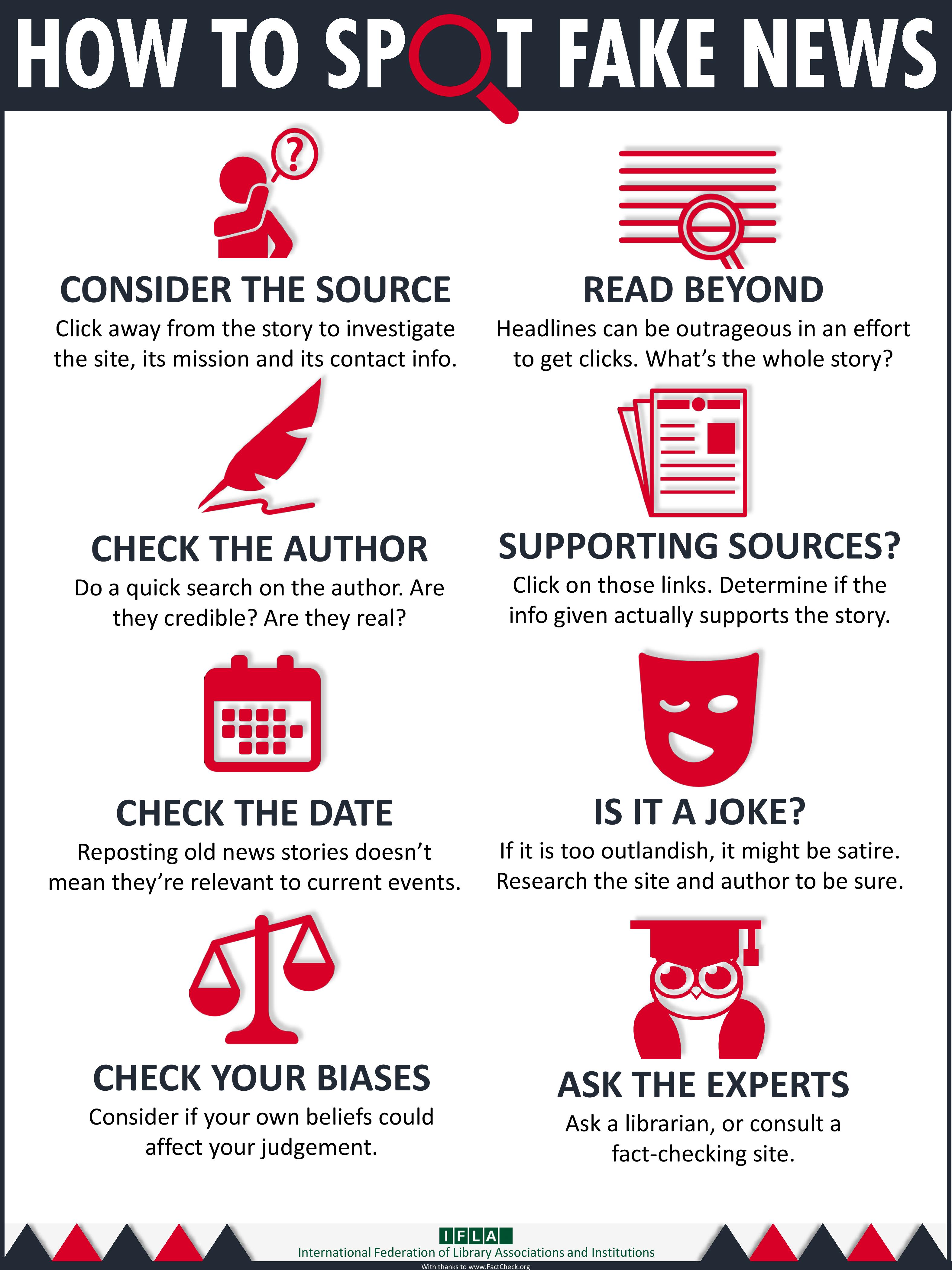
Apparently, Italian youth have some of the same problems telling the difference between factual news reports and fiction that American students have. So the Italian government (public education is more centralized there) has added How to Spot Fake News to the curriculum. NPR reports.

Questions...

•Should government offer training in how to spot fake news?

•Should school districts like Los Angeles and Glendale Unified (or GCC) offer training in how to spot fake news?

•Should social media companies do something about fake news? What should they do?

Labels: , , , , , ,

Thursday, November 14, 2019

"Enemy of the American People"

The following is a MediaNote Classic. It was first presented to MC101 students in March 2017.

Perhaps the single most startling statement of President Trump's short time in office is his proclamation that the media is the "enemy of the American people." While it is true that there have been a huge number of negative stories about Mr. Trump in the media, it is also true that the news media has always taken on an adversarial role toward the President. But the question is, is that adversarial role good for America? Two past Presidents--one a Democrat, the other a Republican--talk about the need for a news media that is free to criticize anyone, especially the President.

Questions...

•What set of rules would you create for the White House Press Corps, no matter who is in office?

•What do you wish the American news media did better? What is the American news media good at?

•What are appropriate ways for the President to respond to news stories he feels are untrue or unfair?

•How do you feel about the President's Twitter account?

Labels: , , , , , , , , ,

Tuesday, May 28, 2019

Forget This!

This is a Medianote Classic. It was originally presented to MC101 students in September 2015.

There is an amazingly unfortunate video of you going around the Internet. Should it be allowed to haunt you forever, or can search engines and social media sites be forced to take that video down. Large online companies like Google and Facebook are running into conflicts over the European idea of "The Right to be Forgotten." NPR reports.

Questions...

•In Germany, once a law-breaker has paid his or her debt to society, record of the criminal conviction is erased from the public record. What do you think of this concept?

•Should public figures (politicians, celebrities and other famous people) have the right to be forgotten, or should this only be for regular people?

•What other types of problems with content on their sites do multinational Internet companies run into?

•Should the right to be forgotten be extended to the U.S.?

•Are there any practical problems with "The Right to be Forgotten" on the Internet?

Labels: , , , , ,

Tuesday, May 14, 2019

When Speech Isn't Really Speech

The following is a MediaNote Classic. It was originally presented to MC101 classes in May 2016.

Freedom of Speech is a huge idea expressed very briefly in the First Amendment. So it is up to courts to decide what Freedom of Speech means, especially as it relates to technologies The Founders couldn't have imagined. Computer code, for example. NPR reports.

Questions...

•Name some things that aren't really speech, but they are sort of similar to speech?

•When does government force you to say or pass along messages you'd rather not say or pass along.

•What would be the impact if government could force software developers to put in code they don't want to put in?

•Political money has considerable free speech protection. What problems does that cause for the political system?

Labels: , , , ,

Thursday, February 28, 2019

Busy News Day

These are big times in the news business. Mr. Trump's former personal attorney has recently given open Congressional testimony in which he has called the President a racist, a liar and a cheat. Meantime, nuclear arms talks with North Korea have suddenly ended. Pakistan and India--both nuclear-armed nations--are once again uncomfortably close to war. And migrant children continue to be separated from their families. We will take a look at the front page of the Los Angeles Times to see how they are covering this busy news day.

Questions...

•What do you think of the stories on the front page? Do you think the editors judged the day's top stories correctly? What would you change?

•The class can read either the Sheriff story or the Trump/Senate story. Do you feel The Times' coverage of the story is fair to all parties? What would you change?

•Is the Trump/Senate story sort of story that Mr. Trump will call "fake news"? What do you think of that claim?

•The Critical-Cultural Theory states that media consumers use media messages to construct their own world view. What would a Trump or Sheriff Department supporter take out of this coverage to support his ongoing views? What would a Trump or Sheriff Department opponent take out of it? What do you think the undecided reader will take out of this coverage?

•How can the Los Angeles Times or other major new outlet cover a complex news story more credibly or effectively than a blogger than a small following?

•You are a candidate in the upcoming L.A. Unified school board election and you have found out that your opponent is a gun enthusiast who wants to arm classroom teachers. You want to make this revelation public. Are you likely to get more coverage or less coverage for this story in the Monday paper? Why?

Labels: , , , , , ,

Monday, October 29, 2018

Ultimate Sacrifice for Free Expression

Journalists are often disparaged, sometimes sued, and occasionally killed for exercising their freedom of expression. There is a growing belief that Washington Post Journalist Jamal Khashoggi may have made the ultimate sacrifice for having his beliefs published. NPR reports...

In solidarity with Freedom of Expression, here is the link to Jamal Khashoggi's last column.

Questions...

•Why is free expression important? What would you lose if we didn't have it?

•Should the US be a champion of free expression around the world--or are we just imposing our cultural preferences on others?

•Do we have too much free expression in the US, too little, or is it just about right?

•Will Mr. Khashoggi's suspicious death make his columns more read or less read?

Labels: , , , ,

Tuesday, September 11, 2018

Just Burn It!

Nike has made the intentionally-provocative decision to star former NFL Quarterback Colin Kaepernick in a series of ads. Kaepernick is the player who chose to kneel during the national anthem as a silent protest against police mistreatment of people of color. Some conservatives have reacted to the ad campaign by burning their Nike equipment, sometimes putting video of the burnings on YouTube. NPR reports.

Questions...

•Who is Nike's target customer? Why is Nike more likely than Budweiser to use Colin Kaepernick in an advertising campaign?

•What does this do for Nike's brand-name recognition?

•Is Kapernick's kneeling covered by the First Amendment? If so, what part of the First Amendment?

•Are videos of angry people burning Nike products also covered by the First Amendment? Do these videos help Nike or hurt Nike?

•What do you think of Nike's use of Kaepernick from a business standpoint? How is it a good idea? How is it a bad idea?

Labels: , ,

Monday, July 09, 2018

Eurofornia

Californians are perhaps a little more willing to accept European-style government regulations than, say, Texans. Furthermore, California is too big a market for companies to ignore, even if it isn't always the easiest place to do business. So it probably makes sense that California is at the forefront of Internet privacy laws. NPR reports.

Questions...

•If things go as planned, in 2020 we will know what companies know about us. Will this be an important right or a trivial one? Why?

•Why might this new law have an impact on your next refrigerator or home security system?

•Should we as Californians care that this law might add difficulty and expense for some Internet companies? Why might this be more of a concern in Northern California?

•Why do you think the big tech companies didn't just give big money to defeat the ballot measure?

•If you were CEO of a tech company that deals in consumer information, how would you want the new law to be crafted?

Labels: , , , , , ,

Wednesday, April 11, 2018

Hail to the Tweet

Would Donald Trump be President if Twitter didn't exist? It's an open question since it is certainly part of his success. As this NPR story suggests, maybe Mr. Trump is the first Twitter president.

Questions...

•Why is Twitter an effective medium for Mr. Trump? How are Trump and Twitter a good match?

•Is Twitter an inherently brutal medium? Is it anti-intellectual? How?

•What types of communications is Twitter good at? What types is it not so good at?

•What is the role of TV news and newspapers if the president doesn't hold news conferences, but tweets instead?

Labels: , , , , , , , ,

Thursday, March 22, 2018

Is It Fun To Be Fake?

The human imagination can construct a seemingly limitless range of outrageous, hilarious, maddening or depressing thoughts. Real life, however, is bound by the dullness of reality.

On Twitter, a lot of true things are reported. But, according to a major academic study, it's the fake stuff that is more likely to be shared and spread. NPR reports.

Questions...

•What makes a good rumor, or good gossip?

•What are some of the best (or worst) fake news stories that you have seen?

•Why do you think false stories are more likely to be spread?

•Do you blame Twitter and other social media companies for the rise of false news?

•What should Twitter and other social media companies do about false news? What can we do about it?

Labels: , , , ,

Thursday, February 22, 2018

Russian to Anger

There are obvious deep and angry divisions in American Society. Your Uncle Fred wants to put Hillary Clinton in prison. A coworker thinks anyone who eats a hamburger is an accessory to murder. Your neighbor is deeply suspicious of immigrants.

But where do these extreme attitudes come from? Does the decline of the "Gatekeepers" (this term will be explained) have anything to do with this? And is there a systematic campaign by the Russians (or others) to support extreme ideas designed to destabilize American society? NPR reports.

Questions...

•Where do your thoughts and ideas come from?

•On what issues could extreme talk (rhetoric) deeper the divisions in American society?

•What responsibility do social media companies have to make sure American Society is not destabilized by outside influences?

•Does the First Amendment help us or hurt us in this situation?

•What can we as individuals do about this?

Labels: , , , , ,

Monday, November 20, 2017

Free Speech Case Hits Close to Home

It's easy to think that the big political protests, and the legal questions that they raise, are restricted to campuses like Berkeley or Harvard. However, sometimes major First Amendment battles are being waged at community college near us. A case in point is a matter involving L.A. Pierce College in Woodland Hills. The Washington Post reports.

Questions...

•Do you agree with the general idea of "Free Speech Zones" on campuses and other places?

•Is there anything wrong with Pierce College's free speech zone?

•Do students, faculty and others have a right TO NOT be drawn into protests?

•How would you like this case to turn out?

Labels: ,

Wednesday, November 01, 2017

Anti-Social Media

The following is a Medianote Classic. It was originally presented to MC101 students in Spring 2016.

At its worst, social media can be cruel, creepy and dangerous. Most of us are able to avoid the worst effects, but adolescents are disproportionately damaged by abusive posts, photos and texts. NPR reports.

Questions...

•Is the internet more dangerous for girls than boys? Why or why not?

•What is the line between acceptable and unacceptable online banter between middle school or high school boys and girls?

•What do parents, teachers and other older people not understand about cyberbullying?

•A Crescenta Valley student committed suicide a couple of years ago after being cyberbullies. The school district responded by hiring a company to scan student social media posts for mentions of drug use, gang membership, cyberbullying or suicidal thoughts. Was this a good idea or a bad idea? Why?

Labels: , , , , , , ,

Monday, October 23, 2017

YouTube or TheTube?

The following is a MediaNote Classic. It was originally presented to MC101 students in March 2017.

YouTube viewership continues to grow rapidly, while traditional television viewing has peaked, bringing us very close to the point where YouTube IS television as much as NBC is television. How is that changing what we watch and how what we watch impacts our view of the world? NPR reports.

Questions...

•If TV is more like YouTube in 10 years, is that a good thing or a bad thing? Why?

•Is YouTube more a short head or a long tail media outlet? Why?

•Should YouTube be more of a gatekeeper? How might gatekeeping change YouTube?

•Is YouTube's recommendation engine partly to blame for growing extreme beliefs and rhetoric in American society? Why or why not?

Labels: , , , , , ,

Wednesday, September 27, 2017

Marketplace of Ideas

The First Amendment freedom of speech is often described as creating a "marketplace of ideas." In this marketplace, all are free to present their ideas and, hopefully, the soundest of them will become the most prevalent. But when to regulate speech has always been controversial. After all, what is inflammatory speech to one person is a hard truth to another. NPR reports.

Questions...

•Why should we have free speech? What does it do for our society?

•What types of speech currently test the limits of free speech?

•Does the Marketplace of Ideas work? Do the most credible, rationally-sound ideas inevitably win out?

•Is the solution to be an "absolutist" on the First Amendment? Why or why not?

Labels: , ,

Thursday, September 07, 2017

Who Does the First Amendment Protect?

Students generally have an intuitive understanding of Freedom of Speech. Freedom of the Press is a little more nuanced. Students are even more confused when the right to speech bumps up against the right to a free press. One of those battles is being argued now as extremist persons and groups seek a right to express their views and raise money on popular web sites. NPR reports.

Questions...

•What does the First Amendment freedom of speech mean to you? What does freedom of the press mean to you?

•Should Internet companies have the right to exclude views they feel are offensive or dangerous?

•Is raising money a form of speech? Does that mean that extremist groups have a First Amendment right to not get kicked off crowdfunding websites?

•Is Google more like the LA Times or CBS (which can legally control what goes into the paper or onto the screen) or is it more like the phone company (which can't legally exclude groups they don't like from making phone calls)?

Labels: , , , , ,